Efficiency and Environmental Impact: Optimizing Lawn Care
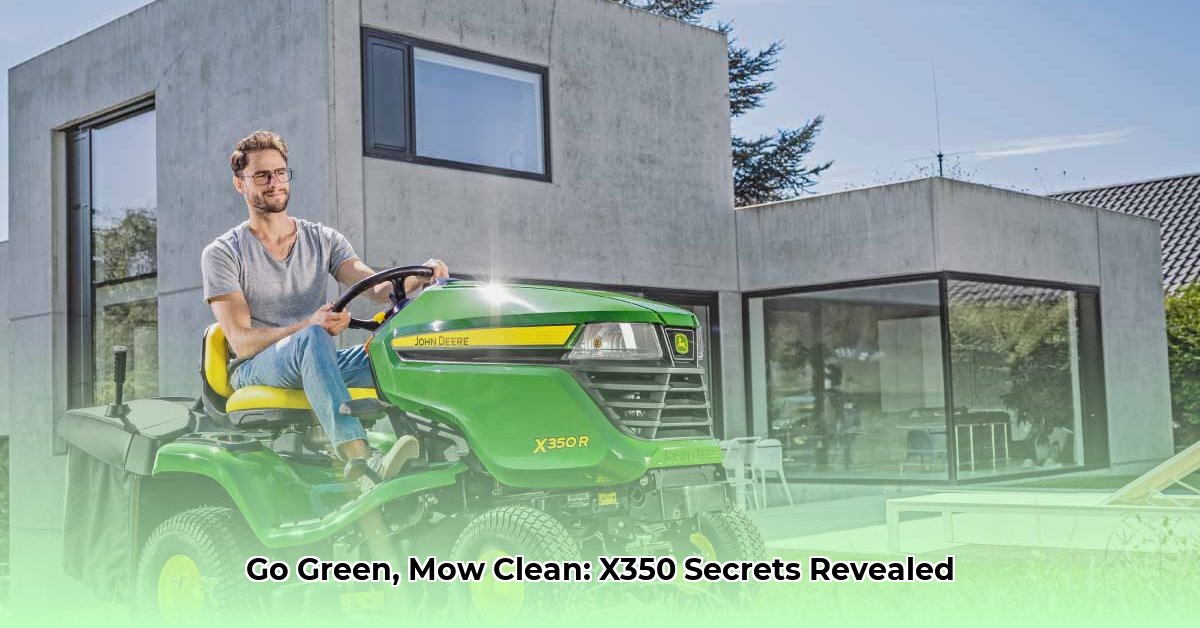
The John Deere X350 series, encompassing the X350R (rear-discharge) and the standard X350, presents a compelling case for sustainable lawn care. Key features like the Accel Deep and Edge™ Rear-Discharge decks (X350R) minimize grass clumping, leading to more efficient operation and reduced wasted effort. However, the optional MulchControl™ system (standard on the X350R), which finely shreds grass clippings for return to the lawn as natural fertilizer, is the true sustainability champion. This "grass-cycling" method demonstrably reduces the need for chemical fertilizers, a significant environmental benefit. Isn't minimizing chemical fertilizer use a key goal for environmentally conscious lawn care? For more on larger John Deere tractors, check out this link to the John Deere 650.
The X350's larger fuel tank also contributes to sustainability by reducing refueling stops, conserving fuel and lowering greenhouse gas emissions. The inclusion of a robust 12-amp charging alternator further enhances efficiency, minimizing reliance on external charging sources. This system's effectiveness, however, is contingent on factors such as grass density and moisture levels. Excessively wet conditions might lead to clumping rather than effective mulching.
Durability and Lifespan: A Long-Term Investment
John Deere's commitment to durability is evident in the X350's robust construction: cast-iron cylinder liners, heavy-gauge steel decks, and low-tension belt drives all contribute to a longer lifespan. The 4-year/300-hour warranty underscores the manufacturer's confidence in this longevity. This translates to reduced replacement needs over the tractor's lifetime, minimizing waste and lowering long-term environmental impact as well as saving money. But while the initial cost is high, the extended lifespan typically lowers the cost-per-use compared to less durable models. How does this extended lifespan affect the overall cost-benefit analysis for sustainable lawn care?
Economic Considerations: Balancing Initial Cost and Long-Term Savings
The John Deere X350's high purchase price is a significant barrier to entry for many. However, a comprehensive cost-benefit analysis is crucial. Factors such as reduced fuel consumption, decreased fertilizer use, and extended lifespan can potentially offset this initial investment over time. Financing options can alleviate the immediate financial burden. Still, the embedded energy costs associated with the tractor's manufacturing, transportation, and eventual disposal must be considered. A comprehensive lifecycle assessment (LCA) is needed to fully understand the environmental impact. How can we better assess the overall environmental footprint of products like the X350?
Sustainability Analysis: A Balanced Perspective
The following table summarizes the sustainability aspects of the John Deere X350:
| Feature | Pros | Cons |
|---|---|---|
| Mulching System | Reduces fertilizer use, minimizes waste, potentially improves soil health. | Effectiveness highly dependent on grass conditions; may not always be suitable for all lawns. |
| Durability/Warranty | Extended lifespan, reduced replacements, minimizing waste. | High initial purchase price remains a significant barrier. |
| Fuel Efficiency | Lower fuel consumption, reduced greenhouse gas emissions during operation. | Manufacturing and transportation still contribute to the overall carbon footprint. |
| Manufacturing Impact | Ongoing research continues to refine understanding of manufacturing's impact. | Full lifecycle assessment (LCA) needed for complete environmental impact evaluation. |
Actionable Recommendations: Maximizing Sustainability
To maximize the environmental and economic benefits of your John Deere X350:
- Prioritize Preventative Maintenance: Regular servicing extends the tractor's lifespan.
- Master MulchControl™: Optimize the MulchControl™ system for your specific lawn conditions.
- Responsible Disposal: Properly recycle or dispose of worn parts.
- Explore Financing Options: Consider financing for easier affordability.
- Consider the Pre-Owned Market: Purchasing a used X350 can reduce the environmental impact of new manufacturing.
Conclusion: Sustainable Lawn Care Through Informed Choices
The John Deere X350 offers several features that promote sustainable lawn care. While the initial cost is high, the long-term benefits of reduced fuel consumption, minimal fertilizer needs, and extended lifespan should be considered. However, a thorough lifecycle assessment is crucial for a complete understanding of its environmental impact. Further research into LCAs will continue to refine our understanding of the environmental impact of such products. The decision to purchase an X350 therefore requires careful consideration of both environmental concerns and budgetary constraints. Ultimately, responsible ownership and maintenance are crucial for environmentally conscious lawn care.